Finding the best gifts for children aged 6 and 8 means choosing presents that match their rapidly developing skills, growing independence and individual interests. Children in this age range are often ready for more detailed construction projects, strategic games, science experiments and creative challenges. However, they still need toys that feel entertaining, accessible and rewarding.
The ideal present will depend on the child. One may be fascinated by space and science, while another prefers drawing, outdoor activities, role play or family games. A product that delights an eight-year-old with considerable building experience could frustrate a six-year-old encountering the same type of activity for the first time.
This pillar guide explores the best gifts, games and toys for 6 to 8 year olds across major product categories. It includes educational toys, STEM gifts, construction sets, arts and crafts, puzzles, role-play products, board games and outdoor activities. It also explains how to choose presents for different ages, personalities, occasions and budgets.
This article may contain affiliate links. If you purchase through one of these links, we may receive a small commission at no additional cost to you.
What Children Aged 6 and 8 Need From a Good Toy
Between six and eight, children become increasingly capable of following multi-stage instructions, managing rules and working towards a goal. Many can concentrate for longer periods than they could during their preschool years, although they still benefit from activities that provide variety and visible progress.
A good toy should offer an appropriate challenge. If the task is too simple, the novelty may disappear quickly. If it is too advanced, the child may need constant adult assistance and lose confidence. Manufacturer age guidance is therefore useful, but it should be considered alongside the child’s interests and previous experience.
Children aged six to eight commonly benefit from toys and games that encourage:
- Creative thinking and self-expression
- Communication and social interaction
- Reading, spelling and vocabulary
- Number recognition and mathematical reasoning
- Planning, concentration and problem-solving
- Fine motor skills and hand-eye coordination
- Physical movement, balance and confidence
- Imaginative and independent play
- Patience, resilience and learning from mistakes
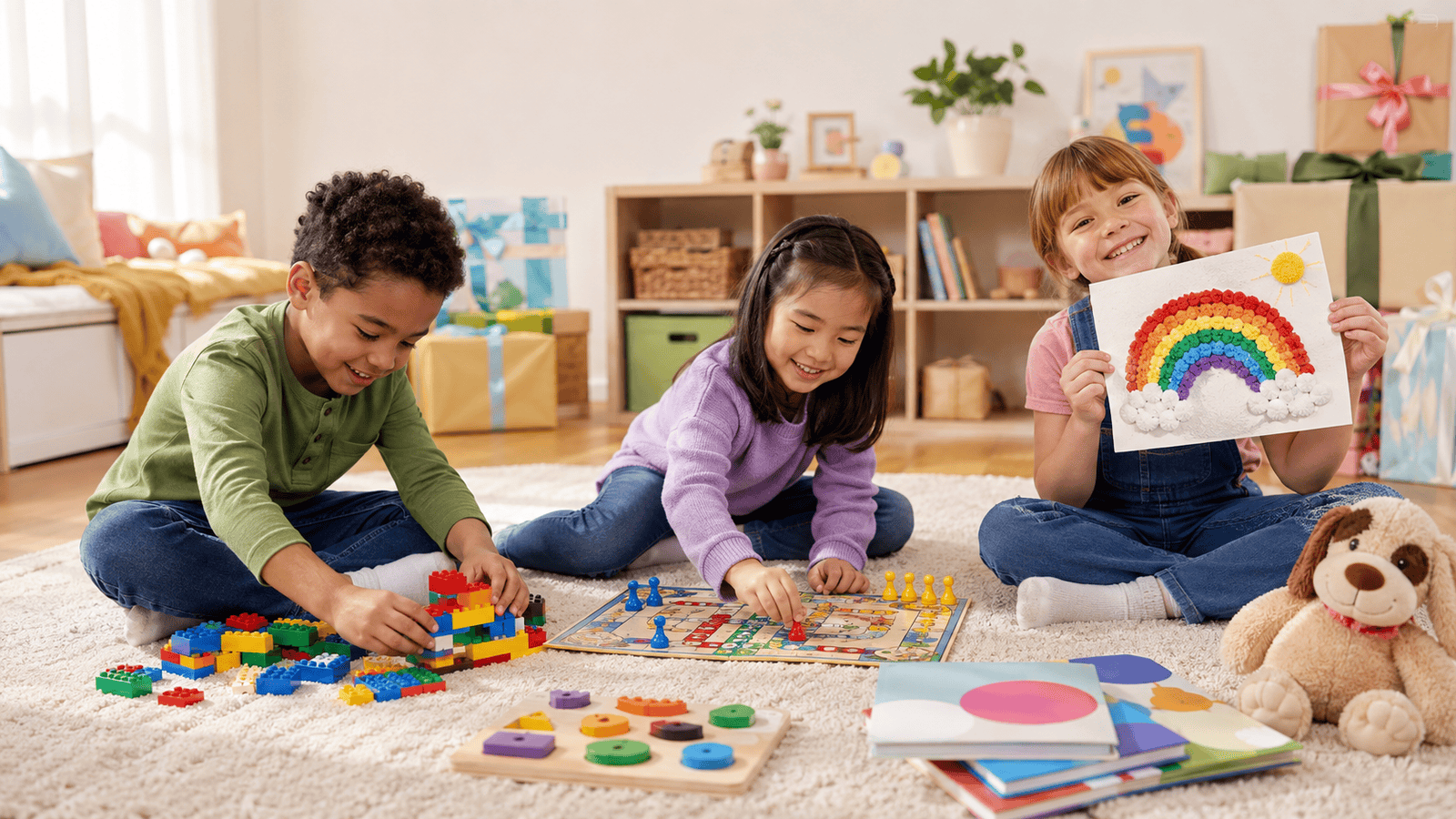
Play does not need to resemble a lesson to be educational. A board game can support maths, communication and decision-making. A construction set can develop spatial awareness and engineering skills. Art materials can encourage creativity, planning and coordination.
Consider the child’s interests first
Interests are usually more helpful than trends when choosing gifts for children aged 6–8. Observe what the child already enjoys or ask a parent what activities currently hold their attention.
A child who collects stones, leaves or shells may appreciate a nature-exploration kit. Someone who spends hours inventing buildings could enjoy a reusable construction set. A child who likes telling stories might prefer figures, costumes, creative writing cards or an imaginative playset.
The gift can either develop an established hobby or introduce a closely related activity. For example, a child interested in animals might enjoy a wildlife book, binoculars, an animal-themed puzzle or a beginner microscope.
Avoid choosing a product solely because it is currently popular. Trends can be useful when they connect with the child’s genuine interests, but a heavily promoted toy may not provide lasting play value.
Look for repeatability and progression
The best toys for 6 to 8 year olds can usually be enjoyed more than once. A game with changing outcomes, a reusable craft set or an open-ended building system may remain interesting for months or years.
Progression is also valuable. Some educational games contain several difficulty levels, allowing children to begin with simple challenges and advance gradually. Construction sets may include instructions for a starter model before encouraging original designs.
Check whether consumable materials can be replaced. A science or craft kit that requires proprietary refills could become expensive, while a product that uses widely available paper, pencils or household ingredients may offer better long-term value.
Balance independent and shared play
Children in this age group often enjoy playing independently, but shared activities remain important. Family board games, collaborative construction projects and outdoor team games can encourage communication and cooperation.
A versatile present might support both types of play. A child could build a model independently and later use it in a game with friends. A puzzle may be completed alone or turned into a family activity.
When selecting games for 6–8 year olds, check the minimum number of players. A game designed for four or more people may not receive regular use in a small household. Two-to-four-player games are often more adaptable.
Best Gift, Game and Toy Categories for Ages 6 and 8
The comparison table below provides a quick overview of popular gift categories and their potential benefits.
| Gift category | Best suited to | Skills and benefits | Typical budget |
| STEM and science kits | Curious investigators | Observation, reasoning and experimentation | £15–£60 |
| Construction and engineering sets | Young builders | Planning, spatial awareness and creativity | £15–£75 |
| Family board games | Social or competitive children | Communication, strategy and turn-taking | £10–£45 |
| Arts and crafts sets | Creative children | Imagination, patience and fine motor skills | £8–£45 |
| Puzzles and brain teasers | Independent problem-solvers | Logic, memory and concentration | £8–£40 |
| Outdoor and sports toys | Active children | Coordination, movement and confidence | £15–£80 |
| Role-play toys and figures | Imaginative storytellers | Language, creativity and social play | £10–£60 |
| Coding and technology toys | Technology enthusiasts | Sequencing, logic and digital confidence | £20–£120 |
| Books and activity sets | Readers and independent learners | Literacy, knowledge and concentration | £5–£35 |
| Music and performance gifts | Expressive children | Rhythm, confidence and coordination | £10–£70 |
Educational, STEM and technology toys
Educational toys for 6 to 8 year olds are most effective when learning happens through active participation. Children should be able to build, investigate, calculate, programme or test something rather than simply watch the toy perform.
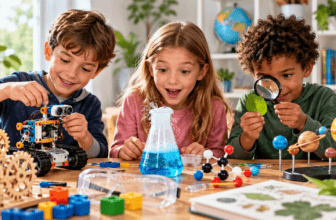
Science kits can introduce subjects such as magnets, plants, electricity, chemistry and the human body. Look for clear instructions and activities that produce visible results. Children are more likely to remain interested when they can observe a reaction, build a working model or record what happened.
Check how many experiments are included and whether they can be repeated. Some kits contain enough material for only one attempt, while others include reusable equipment. Confirm whether household ingredients, batteries or adult supervision are required.
STEM toys for children can also include engineering sets, marble runs, gears, electronic circuits and mechanical models. These activities encourage children to follow instructions and solve problems when the design does not work immediately.
Coding toys for beginners introduce sequencing, patterns and cause-and-effect relationships. Some products use buttons, tiles or physical cards and do not require a screen. Others connect to an application on a tablet or computer.
Before buying a connected coding toy, verify:
- Device and operating-system compatibility
- Whether an internet connection is required
- Whether the supporting application is free
- Whether essential features require a subscription
- How long software support is expected to continue
- Whether the product works without creating an online account
Technology gifts can be impressive, but complexity should not be mistaken for educational value. A simple activity that the child can explore independently may provide more meaningful learning than an advanced robot requiring continuous adult assistance.
For a closer look at science, engineering and technology presents, visit our guide to the best STEM gifts for curious children.
Creative, construction and imaginative toys
Building and construction toys are among the most versatile presents for children aged 6 to 8. They combine practical problem-solving with creativity and can support both guided and open-ended play.
A child may begin by following instructions to create a vehicle, building or machine. Later, the same components can be used to invent new designs. Expandable construction systems can offer particularly strong long-term value because additional pieces may be added over time.
Choose a set that provides an achievable first project. A large model with hundreds of pieces might appeal to an experienced eight-year-old but overwhelm a younger child. Smaller sets can provide an accessible introduction and still leave room for experimentation.
Arts and crafts gifts include drawing supplies, painting sets, modelling materials, jewellery projects, weaving kits and beginner sewing activities. These products can help children develop fine motor control, patience and creative confidence.
Before purchasing a creative set, check:
- Whether the materials are washable and non-toxic
- Whether child-friendly tools are included
- How many projects can be completed
- Whether replacement materials are readily available
- Whether the activity requires close adult supervision
Reusable art materials often provide better value than a one-time project. A quality sketchbook and pencils may be more useful to an enthusiastic artist than a large case containing many low-quality supplies.
Role-play products can also support creativity. Figures, dolls, costumes and playsets allow children to invent characters and construct detailed stories. At this age, imaginative games may include rules, ongoing plots and collaboration with friends or siblings.
Look for open-ended playsets that work with toys the child already owns. A flexible set can inspire more varied play than a product tied to one predetermined storyline.
Books and storytelling activities also belong in this category. Illustrated novels, joke books, fact collections and creative writing prompts can encourage reluctant as well as confident readers. Match books to reading ability and interests rather than relying only on the age printed by the publisher.
Board games, puzzles and active-play gifts
Family board games for children aged 6 and 8 can teach turn-taking, communication, planning and respectful competition. Children may also practise counting, reading and decision-making without feeling that they are completing schoolwork.
Choose a playing time appropriate for the child’s concentration. Short rounds can be repeated and may work better than a game lasting several hours. Cooperative games, in which players pursue a shared objective, are useful for children who find direct competition difficult.
Strategy games may appeal to children who enjoy planning ahead. Word games can support spelling and vocabulary, while number games can reinforce mathematical confidence.
Puzzles and brain teasers provide quieter challenges. Jigsaws, mazes, logic cards, three-dimensional puzzles and escape-style activities can strengthen concentration and persistence. A series of gradually harder challenges is often more useful than one puzzle that is either completed immediately or abandoned.
Select a theme that reflects the child’s interests. Animals, geography, dinosaurs, space and vehicles can make a familiar puzzle format feel more personal.
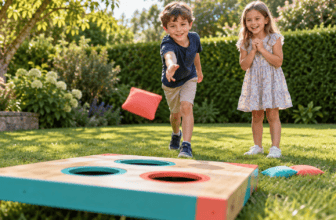
Outdoor toys for 6 to 8 year olds encourage movement and can support balance, hand-eye coordination and social confidence. Possible categories include:
- Skipping equipment
- Football and goal sets
- Throwing and catching games
- Garden target games
- Beginner racket sports
- Balance toys
- Outdoor exploration kits
- Age-appropriate ride-on products
Consider where the gift will be used. Large garden equipment may not suit a family without private outdoor space, while portable sports toys can be taken to a park.
If the product involves cycling, skating or similar activities, check whether a helmet or other protective equipment is required. The cost of essential safety equipment should be included in your budget.
How to Choose the Best Gifts for Children Aged 6 to 8
Although these ages are close, a child’s abilities and preferences can change considerably between six and eight. Choosing an age-appropriate present improves the likelihood that it will be used regularly.
For a more focused selection, you can also explore our guides to the best gifts for 6-year-olds, best gifts for 7-year-olds and best gifts for 8-year-olds.
For six-year-olds: Look for accessible instructions, visible results and manageable playing times. Suitable options include basic building sets, simple family games, beginner science kits, drawing materials and outdoor activities.
Six-year-olds may need occasional help reading instructions or preparing an activity. However, the child should still be able to complete meaningful parts of the project independently.
For seven-year-olds: Children may be ready for multi-stage construction sets, introductory strategy games and more detailed creative projects. They can often manage longer instructions and may enjoy activities that involve planning or recording results.
Educational toys for 7-year-olds can include coding games, nature kits, mathematical challenges and beginner engineering sets. Games with short-term strategy may be particularly appealing.
For eight-year-olds: Many eight-year-olds can handle more complicated rules, longer projects and activities requiring greater patience. They may enjoy programmable toys, detailed models, advanced puzzles and games involving deduction.
Choose according to experience rather than automatically purchasing the most advanced product. An eight-year-old new to a subject may benefit from a beginner set, while a younger child with significant experience may be ready for a greater challenge.
Gifts for boys, girls and different personalities
Searches for gifts for boys aged 6 to 8 and gifts for girls aged 6 to 8 are common, but these categories should not determine the final choice.
A boy may prefer drawing, storytelling or gardening, while a girl may enjoy robotics, football or construction toys. Gender-neutral gifts including puzzles, family games, science sets, books and outdoor activities can suit any child when matched to their interests.
Personality can provide a more useful guide:
- For curious investigators: Science kits, microscopes and nature activities
- For young builders: Construction systems and engineering sets
- For creative makers: Art supplies, crafts and modelling kits
- For active children: Sports equipment and outdoor games
- For social players: Board games and cooperative challenges
- For independent thinkers: Puzzles, books and logic activities
- For storytellers: Figures, costumes and imaginative playsets
- For technology enthusiasts: Coding toys and beginner electronics
Some children move between several types of play. A themed bundle can recognise multiple interests without requiring one expensive purchase. For example, combine a nature book, magnifying glass and notebook to create an exploration gift.
Buying Safe, Useful and Good-Value Children’s Gifts
Safety must be considered whenever you purchase toys, particularly from an online marketplace. Check the manufacturer’s recommended age, safety warnings and instructions before ordering.
The UK Government’s consumer product safety guidance recommends checking appropriate safety markings, manufacturer information and the seller’s identity. It also advises shoppers to read detailed reviews and investigate sellers rather than relying solely on star ratings.
Products containing chemicals, magnets, electronic components or small pieces may require additional supervision. Follow the supplied instructions and do not substitute materials in science experiments unless the manufacturer specifically says it is safe.
Check whether the product has been subject to a safety alert or recall, particularly if buying second-hand. Missing instructions, damaged battery compartments and worn components may make a used toy unsuitable.
What should you check before buying online?
Review the product dimensions, included components and battery requirements. Promotional photographs may show accessories that are sold separately or make the item appear larger than it is.
Check delivery dates if the gift is needed for a particular occasion. Read the returns policy and keep the receipt in case the child already owns the product or the item is unsuitable.
How much should you spend?
There are worthwhile gifts at almost every price level:
| Budget | Possible gift ideas |
| Under £10 | Books, small puzzles, card games and basic craft supplies |
| £10–£20 | Compact board games, activity kits and brain teasers |
| £20–£40 | Science kits, construction sets and family games |
| £40–£75 | Larger building systems, outdoor equipment and coding toys |
| Over £75 | Advanced technology toys, premium outdoor products and expandable sets |
Price should be considered alongside play value. A £15 game used every week may provide better value than a £60 novelty toy that is forgotten after one afternoon.
Which gifts work when you do not know the child well?
Choose versatile products with broad appeal. Accessible family games, general construction sets, illustrated books, puzzles and creative supplies are usually less risky than highly specialised items.
Ask a parent about allergies, available space, existing toys and household rules around screens or toy weapons. A gift receipt gives the family flexibility if the present is duplicated or unsuitable.
What makes a toy good value?
Good value is not simply a low price. Consider durability, repeatability, flexibility and whether the product can grow with the child.
Reusable games and expandable construction sets often offer strong long-term value. Craft and science kits may be worthwhile when replacement materials are affordable and easy to obtain.
Avoid products that depend on expensive subscriptions or hard-to-find proprietary refills unless you know the family is comfortable with the continuing cost.
How can you make the present more personal?
Presentation and context can make a general product feel carefully chosen. Pair a book with a related puzzle, combine sports equipment with a personalised water bottle or add a notebook to an exploration kit.
You can also create themed gift bundles:
- A young scientist box with an experiment kit, notebook and pencils
- A family game-night set with a board game and snacks
- An artist’s collection with quality paper, pencils and storage
- An outdoor explorer pack with binoculars, a guidebook and compass
- A young builder bundle with a construction set and design notebook
- A reading set with a book, bookmark and small reading light
Experiences are another option. Museum visits, creative workshops, sports sessions and outdoor adventures can complement a physical present or replace one entirely.
Ultimately, the best gifts for children aged 6 and 8 are those that respect the child’s individuality. A thoughtful toy does not need to be the newest, largest or most expensive product available. It should suit the recipient’s abilities, connect with their interests and provide opportunities for enjoyable, repeated play.
By comparing age suitability, safety, product quality and long-term value, you can choose games and toys that children will continue to enjoy after the excitement of opening the present has passed.

DTDF Gifts helps shoppers find thoughtful gift ideas for children, families and special occasions. Our guides compare suitable options by age, interests, occasion and budget to help make gift buying simpler and more informed.