Choosing the best gifts for 6-year-olds becomes much easier when you consider the child’s interests, abilities and growing independence. At six, children are developing stronger reading, counting, coordination and problem-solving skills. They are also becoming more imaginative and socially aware, so the right present should feel exciting while providing opportunities to create, explore or play with others.
Some six-year-olds enjoy detailed construction projects, while others prefer art, outdoor activities, science experiments or imaginative role play. There is no single gift that will suit every child. The best approach is to choose something that matches the recipient’s personality and offers enough challenge to remain interesting without causing unnecessary frustration.
This guide explores educational toys, construction sets, creative activities, games and active-play presents to help you find a thoughtful gift for a six-year-old.
Why the Best Gifts for 6-Year-Olds Encourage Learning Through Play
Children often learn most enthusiastically when an activity feels enjoyable rather than instructional. A construction set may introduce basic engineering, a board game can develop counting and cooperation, and an art kit may strengthen coordination and creative confidence.
According to the Education Endowment Foundation’s summary of play-based learning, play can include cognitive, physical and social elements. Its review suggests that play-based approaches may benefit learning outcomes, although the supporting evidence is limited. Toys should therefore complement reading, conversation, teaching and everyday experiences rather than replace them.
A good present gives a child an active role. Instead of simply watching lights or listening to sounds, the child makes decisions, tests ideas, invents stories or solves problems. These experiences can help develop persistence because mistakes become part of the activity.
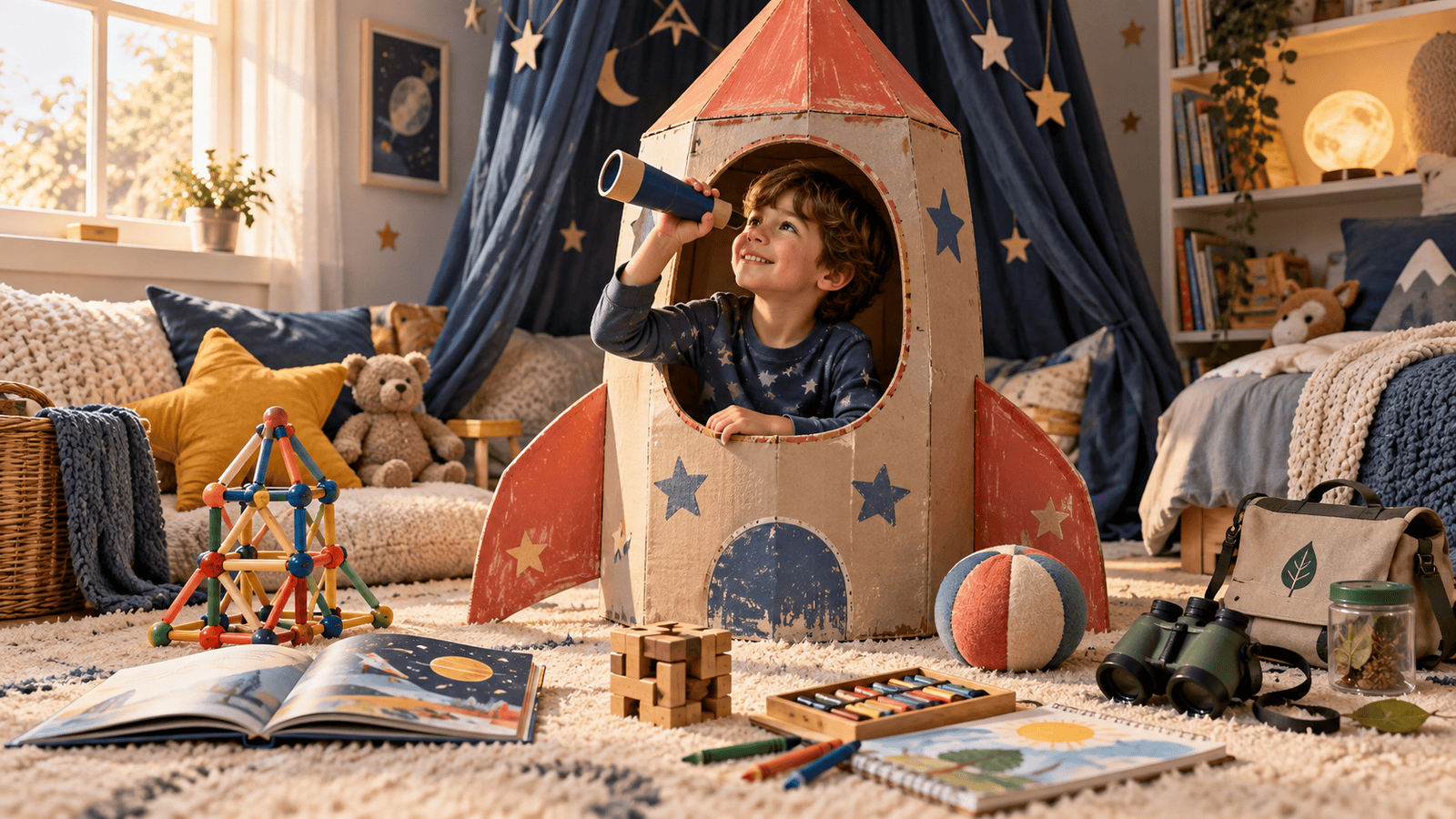
Open-ended toys are particularly useful. Building pieces, art materials, costumes and modelling clay can be used in many different ways. A six-year-old may return to the same toy repeatedly and create something new each time, giving the gift a longer useful life.
How to Choose the Best Gifts for 6-Year-Olds
Begin with what the child already enjoys. A child fascinated by animals may appreciate a nature-discovery set, illustrated reference book or animal-themed puzzle. Someone who enjoys taking things apart may prefer a mechanical building kit, while a child who loves stories might enjoy puppets, costumes or storytelling cards.
Consider the child’s current ability as well as the age recommendation. Six-year-olds develop at different rates, and an activity that delights one child may overwhelm another. Look at the number of pieces, complexity of the instructions, expected playing time and amount of adult assistance required.
A strong gift usually has a clear starting point and room for progression. It might include beginner challenges followed by more difficult activities, or instructions for one project alongside materials for original creations. This helps the toy remain useful as the child’s confidence grows.
Practical details matter too. Check the available storage space, whether the activity is suitable for indoor or outdoor use and whether additional supplies are required. A large playset might be exciting but impractical in a small home. A science kit that constantly needs replacement materials may cost more than expected.
Safety should always influence the final decision. Read the manufacturer’s age guidance, warnings and instructions, especially for products containing magnets, batteries, small components or substances used in experiments. The UK government’s toy-safety guidance explains that toys must meet essential safety requirements and provide appropriate warnings and instructions.
Best Gifts for 6-Year-Olds Who Love Building and Creating
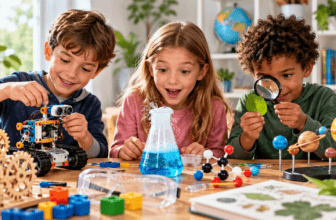
Construction toys can be excellent presents for children who enjoy designing, assembling and experimenting. Building blocks, magnetic tiles, marble runs, wooden engineering pieces and beginner model kits may support spatial awareness, planning and hand–eye coordination.
Choose pieces that are easy for the child to handle and strong enough for repeated use. A kit with illustrated instructions can provide an achievable first project, while additional components allow the child to develop original designs.
The most rewarding building toys make it easy to try again. If a bridge collapses or a tower becomes unstable, the child can adjust the design and discover why the first attempt did not work. This introduces basic engineering ideas without making the experience feel like a lesson.
Creative gifts provide similar flexibility. Washable paints, chunky pencils, modelling clay, stamps, collage materials and child-safe craft kits give children the freedom to make something personal. Avoid sets that require every finished project to look exactly like the example on the box. Creativity is better supported when children can make their own choices.
For more inspiration covering construction, creative and family-play presents, explore our guide to the best gifts, games and toys for children aged 6 to 8.
Best Gifts for 6-Year-Olds Who Enjoy Science and Discovery
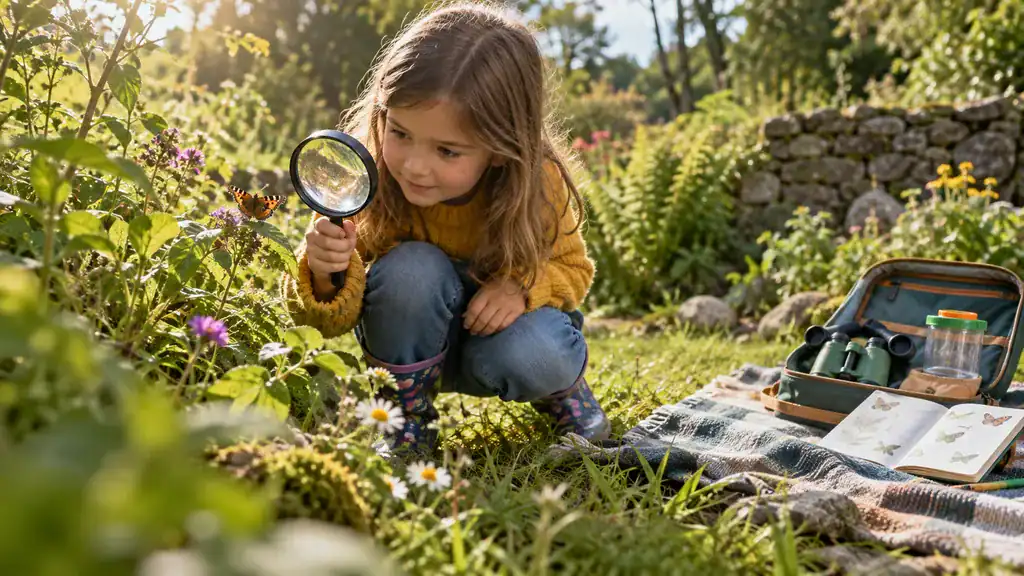
Beginner science toys can turn curiosity into hands-on discovery. Suitable ideas include magnifying glasses, bug viewers, simple microscopes, weather stations, crystal-growing activities and supervised experiment kits.
Look for clear, visual instructions and experiments that produce results within a reasonable time. Six-year-olds may lose interest if an activity requires a long setup or several days before anything happens. Short experiments can provide a quick sense of achievement while encouraging questions.
Nature gifts are another useful option. A child can use a magnifying glass, binoculars or identification cards during a walk, then record discoveries in a notebook. This connects the present to real experiences and provides reasons to use it repeatedly.
Some science kits require require close adult supervision. Check whether the package includes everything needed and whether any materials could irritate the skin or eyes. Adults should prepare the activity, explain the rules and remain nearby whenever the manufacturer recommends supervision.
Children interested in science, mathematics or engineering may also enjoy the ideas in our guide to the best educational toys for ages 6 to 8.
Best Gifts for 6-Year-Olds Who Prefer Games and Puzzles
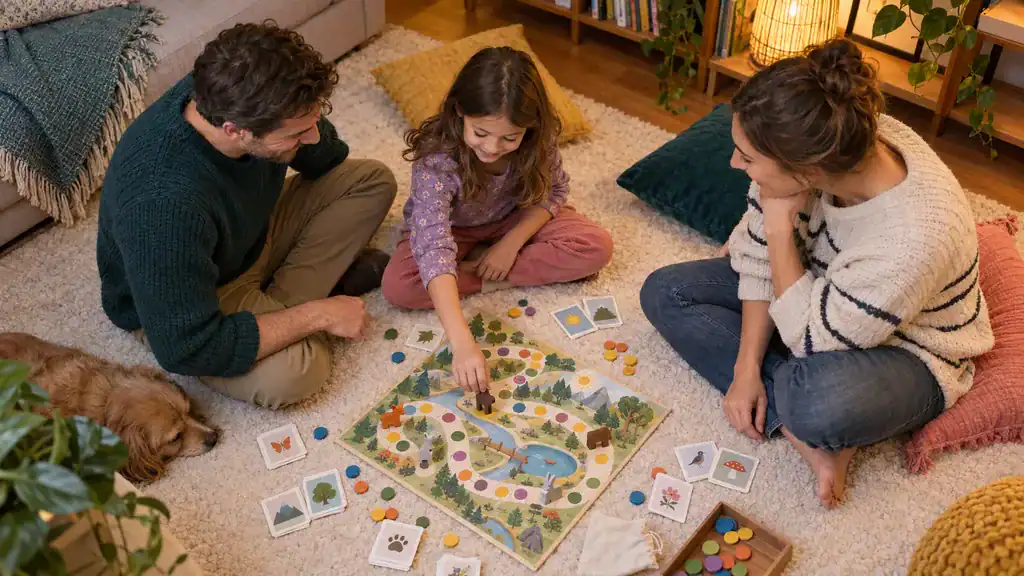
Games and puzzles can support concentration, memory, counting, vocabulary and strategic thinking. They also help children practise waiting, taking turns and responding calmly when another player wins.
When selecting a board game, consider the playing time as well as the age rating. A short game with simple rules may be played suitable than a complicated activity lasting an hour. Games with several difficulty levels can grow with the child and accommodate siblings of different ages.
Cooperative games are helpful for children who find competition frustrating. Instead of playing against one another, everyone works towards a shared objective. This can encourage communication and allow adults to demonstrate problem-solving without controlling the game.
Jigsaw puzzles should offer a manageable challenge. The number of pieces is only one consideration; the size of each piece, complexity of the picture and amount of colour variation also affect difficulty. A visually interesting puzzle connected to the child’s favourite subject is more likely to hold their attention.
Logic puzzles, matching games and maze activities can work well for independent play. However, avoid choosing a puzzle that offers only one brief challenge unless it can be reset, rearranged or used at several levels.
Popular Gift Categories for Six-Year-Olds
Educational and literacy gifts
Illustrated books, word games, magnetic spelling activities and storytelling sets can support growing reading and communication skills. Choose subjects that reflect the child’s interests rather than selecting a book solely because it appears educational.
Storytelling cards and puppets are especially versatile because children can invent characters, create different endings and perform stories for family members. These activities encourage vocabulary, sequencing and self-expression.
Imaginative-play gifts
Costumes, play food, dolls, figures, toy vehicles and miniature playsets can inspire children to create stories based on real life or fantasy. Imaginative play may also help children explore different roles, emotions and social situations.
Select sets that can be combined with toys the child already owns. A simple collection of figures and accessories may offer more possibilities than an electronic playset with fixed sounds and actions.
Outdoor and active gifts
Balls, skipping ropes, beginner sports sets, balance toys, kites and gardening equipment can encourage movement and outdoor exploration. Match the activity to the child’s confidence and the space available.
Protective equipment may be needed for bicycles, scooters, skates and similar products. Check sizing carefully and include the appropriate safety equipment as part of the gift rather than treating it as an optional extra.
Technology-related gifts
Child-friendly cameras, audio players, coding toys and electronic learning devices can be engaging when they encourage creation or problem-solving. Consider whether the product requires an app, internet connection, subscription or frequent battery replacement.
Parents may prefer technology gifts that work offline and offer clear privacy controls. If the toy has a camera, microphone, location tracking or online features, review those functions before giving it to a child.
Gift Comparison Chart
| Gift category | Skills or benefits | Best suited to children who enjoy | Buying considerations |
|---|---|---|---|
| Construction set | Planning, coordination and spatial reasoning | Building and inventing | Difficulty, durability and piece size |
| Art or craft kit | Creativity, concentration and fine-motor skills | Drawing and making | Washability and tool safety |
| Science kit | Curiosity, observation and following instructions | Experiments and discovery | Supervision and required materials |
| Board game | Counting, strategy and turn-taking | Family or group play | Playing time and rule complexity |
| Puzzle | Concentration and problem-solving | Quiet independent challenges | Piece size and difficulty |
| Book or story set | Reading, vocabulary and imagination | Stories and characters | Reading level and subject |
| Outdoor toy | Movement, coordination and confidence | Active play | Space and protective equipment |
| Musical activity | Rhythm, listening and self-expression | Music and performance | Volume and ease of use |
| Coding or logic toy | Sequencing and analytical thinking | Technology and puzzles | Device requirements and replay value |
| Imaginative-play set | Communication and storytelling | Role play and pretend worlds | Storage and compatibility with other toys |
Choosing Gifts for Different Personalities
A thoughtful present should feel connected to the individual child. For a highly active six-year-old, consider a ball game, obstacle-course equipment or an outdoor exploration kit. These gifts create opportunities for movement while still developing coordination and planning.
A child who prefers quiet activities may enjoy puzzles, books, detailed craft kits or construction sets. This does not mean the gift must be solitary; many calm activities can be shared with a parent, sibling or friend.
Social children may appreciate board games, performance activities or collaborative building sets. Look for games that do not eliminate players early, as waiting for everyone else to finish can be frustrating.
For a child who becomes discouraged easily, choose an activity with short challenges and visible progress. Avoid gifts with complicated instructions or projects that take hours to complete before producing a result.
Children with strong existing interests may enjoy a gift that explores the subject from a new direction. A dinosaur enthusiast could receive a fossil-excavation activity, illustrated science book or dinosaur construction kit instead of another ordinary figure.
Giving Experiences Instead of More Toys
Not every gift needs to be a physical toy. Tickets to a children’s theatre performance, wildlife park, museum, science centre or creative workshop can provide an enjoyable shared experience.
Experience gifts work especially well when the child already owns many toys or has limited storage space. Present the experience with a small related item, such as a sketchbook for an art workshop or binoculars for a nature visit, so the child still has something to open.
Memberships and subscriptions can provide value across several months, but check renewal terms before purchasing. Make sure the location is accessible to the family and that booking dates are flexible.
Time can also be part of the present. A homemade voucher for a baking afternoon, craft day, nature walk or family game night costs very little but can feel personal and memorable.
How to Make a Six-Year-Old’s Gift More Meaningful
Presentation adds excitement, but it does not need to be elaborate. Reusable gift bags, fabric wrapping or a decorated storage box can become part of the present.
Include a short personal message explaining why you chose the gift. For example, you might mention the child’s love of drawing, fascination with space or enthusiasm for building. This shows that the present was selected with them in mind.
If the toy requires setup, batteries or assembly, prepare these before it is opened whenever possible. A child may become impatient if they cannot begin playing immediately. Keep the instructions and packaging until you know that every component works correctly.
For gifts involving several pieces, provide a suitable storage container. This makes the toy easier to organise and increases the chance that it will be used regularly.
Frequently Asked Questions
What are the best gifts for 6-year-olds?
The strongest choices match the child’s interests and developmental level. Popular options include construction sets, educational toys, art materials, board games, puzzles, books, imaginative-play sets and outdoor equipment.
How much should I spend on a six-year-old’s gift?
There is no required amount. Consider quality, durability and replay value rather than price alone. An affordable game or craft set that is used regularly may offer better value than an expensive toy that holds the child’s attention for only one day.
Are educational toys good birthday presents?
Yes, provided the toy is enjoyable and appropriate for the child. Look for activities that encourage exploration and decision-making instead of products that rely entirely on repetitive questions or flashing lights.
What should I buy for a six-year-old who has everything?
Consider an experience, personalised book, creative workshop, family membership or consumable activity such as art supplies. Gifts connected to time together can feel more distinctive than another large toy.
Are toys with small pieces suitable for six-year-olds?
Many are, but always follow the manufacturer’s age guidance and safety warnings. Consider whether younger siblings may have access to the pieces and store the toy securely when it is not being used.
What are good non-screen gifts for six-year-olds?
Construction sets, puzzles, board games, books, craft kits, musical activities, sports equipment and nature-exploration tools are all useful screen-free options.
How can I choose a gift when I do not know the child well?
Ask a parent about the child’s interests, existing toys and any practical restrictions. If that is not possible, choose a flexible gift such as an age-appropriate book, reusable art set, simple family game or shop voucher.
Should I choose a challenging toy?
A small amount of challenge can maintain interest and build confidence, but the child should be able to begin without constant adult help. Look for adjustable levels or open-ended activities that can become more complex over time.
Final Thoughts
The best gifts for 6-year-olds balance enjoyment, suitability and lasting play value. Start with the child’s interests, then consider the skills the gift may encourage, the amount of assistance it requires and how safely it can be used.
Educational toys, building sets, games, books, creative materials and outdoor equipment can all be excellent choices. The category matters less than whether the gift invites the child to participate, experiment and return to it again.
Choose quality over novelty, read the safety information and avoid being guided entirely by impressive packaging. A thoughtful present does not need to be expensive or complicated. It simply needs to make the child feel understood while giving them an enjoyable way to play, create or discover.

DTDF Gifts helps shoppers find thoughtful gift ideas for children, families and special occasions. Our guides compare suitable options by age, interests, occasion and budget to help make gift buying simpler and more informed.